
Checking for a Warrant in Yavapai County
Begin with whatever paper you have. A notice, citation, or case number points to one court, and that beats guessing. In Yavapai County, city, Justice, and Superior Court boundaries overlap, so geography alone will not settle which office holds the warrant.
- Find the court through the Yavapai Courts directory.
- Run the official Arizona DPS search with exact name and birth date.
- Use Arizona Public Access for participating case information.
- Use eAccess for an eligible Superior Court document.
- Call the issuing clerk to confirm status and ask about court procedure.
- Use YCSO records for an identifiable agency record, or inmate search when custody is the question.
A blank result is not a clearance. Reporting delays, sealed matters, a different court, or plain system limits can all hide an active warrant from a search. Before you call any Yavapai County clerk, write down the exact spelling you searched, the birth date you entered, the time of the search, and any court name or number the screen showed. Those notes let the clerk tell an input error from a jurisdiction problem. If the matter started with a citation, trust the court printed on it over the city where the stop happened.
The County Warrant App Was Unavailable
The YCSO Warrant Search application has displayed a maintenance notice, with no searchable fields or update schedule available. Treat that app as unreliable until it returns. The right fallback in Yavapai County is the issuing court itself, plus DPS and Public Access, not an unofficial list.
Two official systems may disagree for a time. Keep the case number, warrant number, court name, and date checked, then ask the clerk to reconcile them.
YCSO Records processes and validates warrants for Yavapai County. Its records staff will not run general searches on individuals or hand out NCIC criminal histories. A narrow records request works differently from a status check. Current YCSO instructions ask for a report number, the incident place, the date and time, the names involved, and the particular record sought. What comes back varies. A request may return a redacted file, no responsive record, or an instruction to contact a court. Each outcome describes the records process, not whether an arrest or bench warrant is enforceable at that moment.
Yavapai County Warrant Types
One word, several tools. A warrant can be a bench order, an arrest directive, or something else, and the reason, issuing venue, and next step all depend on the type named in the official Yavapai County record.
| Warrant type | How it arises | Who issues it |
|---|---|---|
| Arrest | Sworn probable cause for an offense | Judge or magistrate |
| Bench | Missed date or failure to comply | Judge in the pending case |
| Search | Probable cause to search a person, place, or property | Magistrate |
| FTA or sentence warrant | Failure to appear, pay, or complete an ordered term | Justice or municipal judge |
| Probation or review warrant | Alleged violation or missed review hearing | Court supervising the case |
Yavapai County materials use the terms bench, outstanding, and failure to appear. "Capias" is not the routine local public term here.
Yavapai County Courts Are a Network
Yavapai County runs one Superior Court with locations in Prescott and Camp Verde. Justice Courts cover Bagdad-Yarnell, Mayer, Prescott, Seligman, and Verde Valley. Nine municipal or magistrate courts serve Camp Verde, Chino Valley, Clarkdale, Cottonwood, Dewey-Humboldt, Jerome, Prescott, Prescott Valley, and Sedona. The official court contact directory maps the whole network.
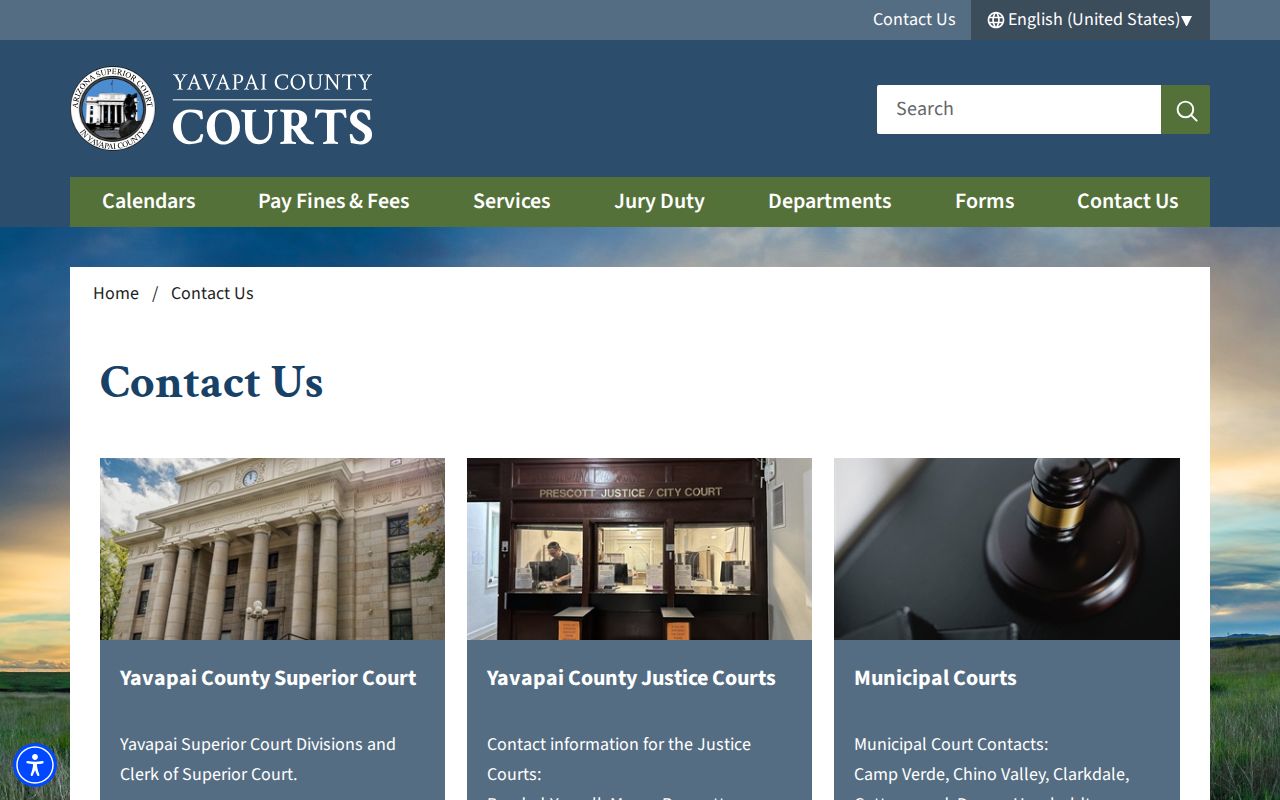
A downtown Prescott address proves nothing about which office you are dealing with. City Court, Justice Court, and Superior Court in Yavapai County are separate offices, and the directory keeps them straight.
Inside a Yavapai County Warrant Record
Fields in a Yavapai County warrant record vary with the warrant and release rules. Copy exact identifiers rather than filling gaps with guesses.
| Issuing court | The venue controlling the warrant |
|---|---|
| Case or citation | The underlying court identifier |
| Warrant number | An official identifier such as WARRANT-ID |
| Person or property | The subject identified in the released instrument |
| Charge or reason | Probable-cause charge, FTA, noncompliance, or another stated basis |
| Bond or appearance | Case-specific terms controlled by the court |
| Status and date | Recorded state and source timestamp |
A custody entry is not proof of a currently active warrant.
Outstanding Calendars Show Local Access
Yavapai County court calendars mark outstanding-warrant sessions and their court times. Rural and regional courts may limit open-court or walk-in periods. Those windows are service clues only. They do not promise a judge will quash a warrant or set any particular bond, and the official Yavapai calendars show how venue and schedule pair up across the county.
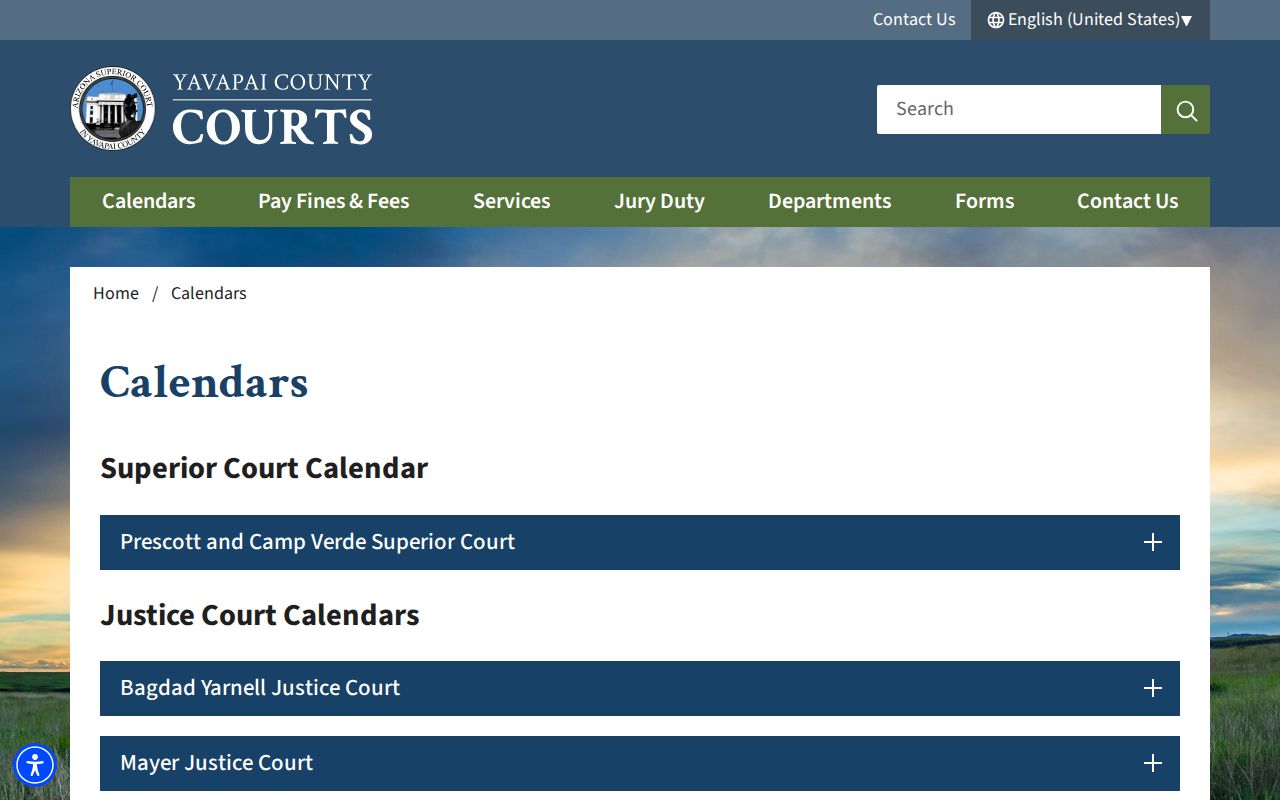
Call ahead before driving out, especially for Bagdad-Yarnell, Mayer, Seligman, or Verde Valley. Mayer notes that access to the Black Canyon City Justice Building is by appointment or court order only, so plan your Yavapai County trip around that.
Issuing and Serving Warrants in Yavapai County
Courts issue warrants in Yavapai County. The Clerk of Superior Court keeps Superior records and issues writs and warrants, while YCSO, city police, constables, and other peace officers serve them according to jurisdiction.
Yavapai County Sheriff’s Office Records
255 E Gurley Street, first floor, Prescott, AZ 86301
928-771-3260
Monday through Friday, 8 a.m. to 5 p.m.; processes warrants and identifiable law-enforcement record requests.
Clerk of Superior Court
120 S Cortez Street, Prescott, AZ 86303
928-771-3312
Maintains Superior Court records; the Criminal Justice Center is a separate court site.
The Prescott Precinct Constable serves warrants for Prescott Justice Court and posts court-directed self-surrender instructions. That program does not reach every county warrant. City police records play a narrower part. Prescott Police sends wanted-status questions to the courts, and Chino Valley's records form is built around an identifiable incident. Cottonwood Police Records and Cottonwood Municipal Court keep different records at different addresses. A law-enforcement file can document an incident or a service step without certifying what the issuing judge's current order says. So end every Yavapai County warrant check with the named court.
Records Counter and Bond Counter Differ
YCSO publishes separate instructions for public-record payments and detention bond transactions. Its records PLC code belongs to record invoices, not bail. A payment receipt also does not itself prove that a Yavapai County court recalled a warrant.
| Need | Correct owner | Confirm |
|---|---|---|
| Sheriff report | YCSO Records | Report details, fee, redaction |
| Warrant status | Issuing court | Active, recalled, quashed, served |
| Custody | YCSO inmate or detention channel | Facility, holds, court date |
| Bond | Court and jail | Amount, form, payment code, release conditions |
Keep those transactions separate to reduce errors and payment scams. YCSO accepts exact cash in person, checks, money orders, cashier's checks, and online card payment for public-record invoices under its published instructions. Those options do not set the payment method for bond or a court fine. Before paying anything in Yavapai County, verify the office, invoice or case number, purpose, and official payment code through a government page, or a phone number you got independently from that page.
If You Have a Warrant in Yavapai County
Contact a licensed Arizona attorney and the issuing court. Ask whether counsel may appear, whether a court date can be set, whether a voluntary surrender is required, and whether the judge allows a motion to recall or quash. Bond in Yavapai County is case-specific.
Do not send warrant money to an unsolicited caller. YCSO and Yavapai Courts say officials do not call demanding payment for warrant or jury matters.
A Yavapai County payment plan comes with a catch. Approval and an initial payment may be required before a warrant is quashed. Paying online by itself promises nothing. If you are already in custody, confirm exact holds and release terms with both the jail and the court. Cottonwood shows how local the process can get. Its Municipal Court publishes weekday walk-in windows for outstanding warrants, yet it still asks people to call first to verify the judge. Sedona tells a person who missed a date to phone the court and ask about the judge's earliest process. Neither city offers a countywide promise. The safest sequence is counsel first, then the issuing court, verified appearance instructions, and written confirmation of any court action. Get it in writing. A warrant tied to another state or a federal authority is a separate problem. A Yavapai County payment or local appearance may not resolve it. Give the jail or court the foreign agency name and warrant identifiers, then ask who controls release and transfer. A short public entry will not reveal the reach of an extradition term, so ask the record owner what its field means.
The 2026 Resolution Event
Yavapai Courts ran a Warrant Resolution Event on June 26, 2026. The program paired court reconnection with preregistered transportation from Prescott, Prescott Valley, and Chino Valley. Community-service providers took part too. It was one date, not a standing appointment. Check the Yavapai County court's current news and calendar pages before counting on another one. The event still teaches a lesson. Resolution can mean finding the right court and clearing practical access barriers, not merely making a payment. Yavapai County criminal-justice planning has also discussed centralized in-custody appearance and bond-review work. Treat that as planning. Implementation counts only if a later official report confirms it. An event also differs from a routine open-court calendar. A calendar may offer a court-controlled chance to appear on an outstanding matter, while an event may add transport or service partners for one date. Either way, the judge keeps authority over the warrant and bond. Confirm eligibility, venue, time, identification, and whether counsel may participate.
Yavapai County Warrant Records and Public Access
Yavapai County records sit inside Arizona's public-records framework, A.R.S. §39-121.01, which sets how agencies handle inspection and copying. Court records add another layer. Judicial rules, sealing orders, and confidentiality limits all apply, so Public Access excludes or suppresses sealed matters, protective orders, mental-health and probate material, victim and witness data, and some juvenile or administrative cases. For search warrants, A.R.S. §13-3918 governs execution, return, and public-access timing. A warrant and its supporting papers generally become public after return unless a court orders otherwise. Active investigations may stay withheld, and released files may arrive redacted. In Yavapai County, no record, a delayed record, and a sealed record are not the same finding. The Clerk supports several Superior Court access methods. Each carries separate fees and limits. YCSO asks for a specific incident or report. Municipal courts vary. Cottonwood accepts court-record requests in person, by mail, or by fax, but not by telephone. Follow the instructions from the office holding the record.
Yavapai County Warrant Terms
Local status words help a reader ask a precise question.
- Bench warrant
- A judge’s order often tied to a missed appearance or failure to comply.
- Arrest warrant
- An order based on sworn probable cause authorizing custody.
- Outstanding
- Not yet resolved according to the controlling source.
- Quash or recall
- Court action withdrawing the warrant.
- FTA
- Failure to appear at a required court setting.
- Extradition
- Return process for a warrant from another jurisdiction.
Keep the label the Yavapai County court actually uses. Swap in no generic synonym. Failure to pay deserves extra care, since nonpayment can lead to different court actions depending on the case. "No bond" and "extradition" are record-specific too. Ask what the field means, whether a later order changed it, and which status date the clerk is using.
Yavapai County Warrants by City
Each city gets its own route. The five largest incorporated places in Yavapai County by 2020 Census count have separate pages, which keep municipal courts and police records apart from county courts.
Prescott Valley
Magistrate Court and Police; some matters route to Prescott Justice Court.
Prescott
City Court, Justice Court, Superior Court, Police, and Sheriff records are distinct.
Chino Valley
Magistrate Court and Police Records, with Prescott Justice Court overlap.
Cottonwood
Municipal Court publishes direct warrant and walk-in instructions; Verde Valley Justice Court is separate.
Sedona
Municipal Court handles city citations and FTA questions; Police Records uses a separate request route.
Use the court printed on the notice or case. Another courthouse being closer does not change that. Population order does not decide jurisdiction either. Prescott Valley and Prescott lead the 2020 incorporated-place ranking, followed by Chino Valley, Cottonwood, and Sedona. Even so, a resident can have a matter in a Yavapai County Justice Court or Superior Court. The city route is a starting point for local police and municipal court contacts, while the case caption, citation, or warrant controls the final route.
Travel Across the Yavapai Court System
Yavapai County splits its court work across four very different buildings. The historic courthouse sits at 120 S Cortez Street in Prescott, while the Criminal Justice Center is at 1200 Prescott Lakes Parkway. Camp Verde Superior Court sits at 2840 N Commonwealth Drive. Verde Valley Justice Court sits at 10 S 6th Street in Cottonwood. The similar-sounding place names hide distinct jurisdictions, so a Yavapai County warrant search starts with getting the venue right. Call ahead. Bring the case or citation number with you, and confirm the counter and the time before you go. Counter staff can walk you through procedure and records access. They cannot give personal legal advice. Mayer's official page puts its caseload at roughly 8,500 cases per year spread across about 1,600 square miles, which is why Yavapai County courts lean on scheduled access and correct venue. Prescott adds another layer of its own. City Court, Prescott Justice Court, the county courthouse, the Clerk, Police Records, and the Criminal Justice Center each answer different questions. The Verde Valley is just as divided. Cottonwood Municipal Court, Verde Valley Justice Court, and Camp Verde Superior Court are separate offices with separate files. So begin with the full court name, never just 'the courthouse.' Ask the clerk to repeat the case number, the warrant label, the status date, and the next court-controlled step. If a relative is already booked, the question shifts from search to custody. The YCSO inmate tool shows the facility and booking context, and the detention line handles logistics. The issuing court in Yavapai County still controls the warrant and the hearing. Watch for an out-of-state hold, an extradition term, or a no-bond order, since any of those can keep a local payment from producing release.