
Yavapai County Bench Warrants Explained
A bench warrant is an order issued by a judge, magistrate, commissioner, or justice of the peace after someone fails to meet a requirement already imposed in a case. In Yavapai County, official sources connect warrants to failure to appear, failure to comply, unpaid court obligations, and incomplete sentence conditions. The order can be executed as an arrest warrant, but it does not establish a new conviction.
The label alone does not reveal the charge, bond, outcome, or whether the warrant has since been quashed. Those are separate record fields. Cottonwood may call a matter an FTA warrant, while county calendars use “outstanding warrants.” Preserve the issuing court’s terminology when asking the clerk to locate the file.
How Yavapai County Bench Warrants Are Issued
The judicial officer reviews the missed setting or noncompliance in the underlying file and decides whether to issue process. The clerk records the order, and authorized peace officers may execute it. A municipal judge controls a city case, a Justice Court controls its precinct case, and Superior Court controls its own criminal matter. The Sheriff, police, or constable may serve the order, but service and issuance are different functions.
Reporting between court, county, and state systems can take time. The Arizona DPS Warrant Search therefore warns that its court-reported information is not real-time or complete. The issuing court remains responsible for confirming current status.
Yavapai Bench-Warrant Calendar Vocabulary
Local calendars use “outstanding warrant,” “open criminal court,” and court-specific session labels rather than one universal bench-warrant term. “FTA” means failure to appear; “quash” means a court action that removes the warrant’s enforceability; “reset” means a new setting. Arizona sources reviewed did not use “capias” as Yavapai’s standard public label.
- Outstanding
- Not shown as resolved by the source; verify with the court.
- FTA
- A missed required appearance that may lead to a warrant and other consequences.
- Quash or recall
- Judicial action changing the warrant’s enforceability.
- Walk-in
- An appearance opportunity, not automatic relief.
Using the exact calendar phrase helps a clerk find the correct setting and avoids treating unlike procedures as interchangeable.
Bench Warrants and Arrest Warrants Compared
Both orders can authorize custody, but they arise through different procedural paths. A bench warrant generally follows a missed duty in an existing case. An arrest warrant rests on a sworn probable-cause showing concerning an offense. The companion Yavapai County arrest warrant search explains that distinct record.
| Feature | Bench Warrant | Arrest Warrant |
|---|---|---|
| Trigger | Missed appearance or failure to comply | Probable cause supported by sworn information |
| Issuer | Judge in the existing matter | Judge or magistrate reviewing probable cause |
| Response | Appearance, reset, recall, or quash | Counsel, surrender, bond, and court appearance |
| Meaning | Unresolved court obligation | Authority to arrest, not proof of guilt |
Tuesday Warrant Windows in Western Yavapai
The county’s published schedules show Bagdad-Yarnell outstanding-warrant matters on Tuesdays at 9:00 a.m. and Mayer matters at the same stated time, with walk-in availability dependent on the calendar. The Bagdad-Yarnell court page and Mayer court page should be rechecked before a trip.
The official Bagdad-Yarnell and Mayer pages show the kind of venue-specific information that matters in a bench-warrant inquiry.
View the Bagdad-Yarnell source.
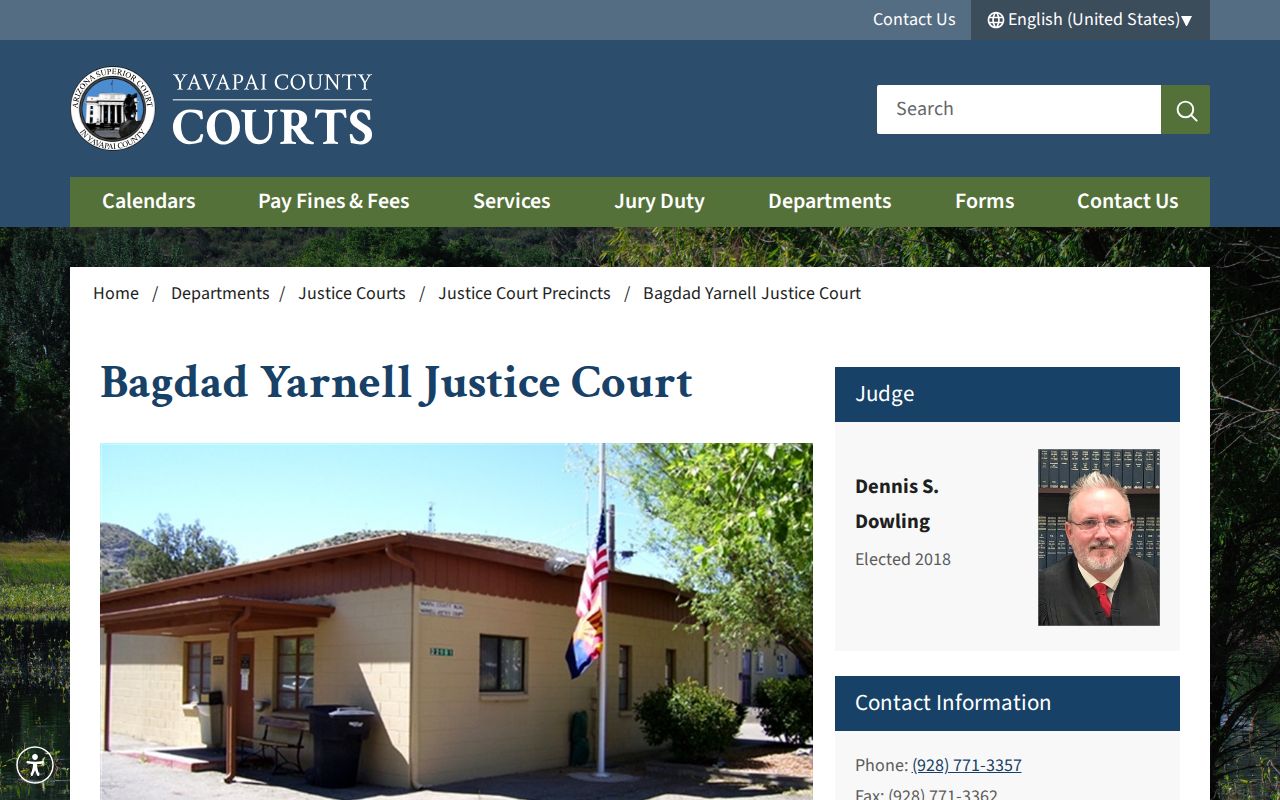
The capture reinforces that the courthouse, schedule, and contact belong to a particular Justice Court.
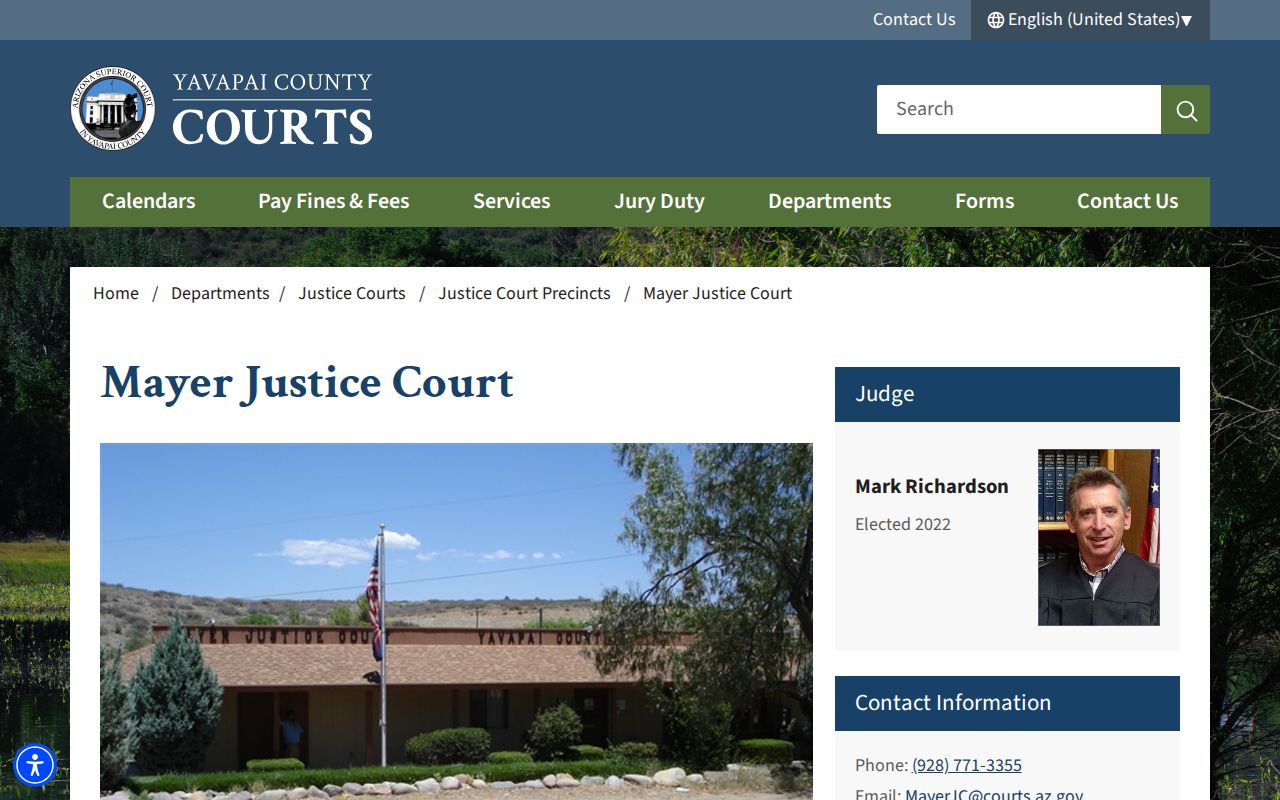
Mayer’s broad service area and appointment limits make calling before travel especially important.
Resolving a Yavapai County Bench Warrant
Only the issuing court’s judicial officer can quash or cancel the order. Before traveling, use the Yavapai Courts directory, confirm the case number and active calendar, and ask what that judge requires. Court staff can describe procedure but cannot provide legal advice.
- Confirm the warrant, case number, reason, and issuing court.
- Ask an attorney whether a motion, counsel appearance, or planned surrender is appropriate.
- Verify the court’s current walk-in or outstanding-warrant calendar before traveling.
- Complete the required appearance, payment-plan step, or other underlying obligation, then obtain court confirmation.
Caution: A walk-in opportunity is not a promise that the judge will quash the warrant, set a particular bond, or finish the matter that day.
Verde Valley and Seligman Appearance Times
Verde Valley Justice Court publishes outstanding-warrant sessions on Tuesdays and Thursdays at 11:00 a.m. Seligman identifies Wednesday at 10:00 a.m. for open criminal court. These are useful routing facts, but holidays, judge availability, capacity, and later calendar revisions can change what is available.
Before leaving: Call the named Justice Court, provide the case or citation number, and ask whether the listed session applies to the warrant and judge.
Someone with counsel should also ask whether the attorney may address scheduling or a motion before a personal appearance.
Payment Plans and Yavapai Warrant Status
The county limited-jurisdiction payment-plan form supports establishing, continuing, adjusting, or reinstating a plan. It also states that approval and receipt of the initial installment are required before a warrant is quashed. Submitting a form or making an isolated payment is therefore not the same as receiving a judicial status change.
Keep the filed form and receipt, then ask the issuing clerk whether the judge approved the plan and whether the docket now records the warrant as quashed. A payment processor cannot independently certify that court action.
When a Walk-In Does Not Quash a Warrant
Cottonwood and the Justice Court calendars illustrate a common misunderstanding. A publicized appearance window creates access to the court; it does not guarantee a particular ruling. The judge may require a new date, bond, payment-plan approval, counsel, or another condition based on the individual file.
If the court cannot finish the issue at the first appearance, ask for the next date, written instructions, and the precise current warrant status. Do not infer that leaving the courthouse means the order was recalled.
Note: Only the issuing court can confirm that its bench warrant has been quashed or recalled.
Finding the Court That Issued the Warrant
Yavapai County has Superior Court locations, five Justice Courts, and nine municipal or magistrate courts. Similar addresses can hide different jurisdictions, so match the court name as well as the building. The Arizona Public Access lookup may identify a participating court and case number, though it is not a live warrant-status service.
Superior Court criminal matters can route to the Criminal Justice Center at 1200 Prescott Lakes Parkway or the Camp Verde location. Justice matters route by precinct. City misdemeanor, ordinance, and traffic cases remain with the relevant municipal court. The originating clerk, not a general sheriff records counter, is the final source for recall status.