
Yavapai County Traffic Warrants Explained
A missed appearance can lead the court to issue a warrant and report a separate license consequence. Post-adjudication nonpayment or failure to complete sentence terms can also trigger court action. The exact result depends on the file, so do not assume every unpaid citation immediately follows the same path.
Five Yavapai Justice Courts hear precinct traffic matters, while nine municipal or magistrate courts handle local traffic cases. The court printed on the citation determines where to confirm status, plead, pay, request a plan, or ask about an appearance.
Checking for a Traffic Warrant
Begin with the citation number, party name, birth date, and named court. Arizona Public Access may locate a participating case, and Arizona DPS Warrant Search accepts first name, last name, and date of birth. Neither tool promises live, complete county status.
- Read the citation for the court and appearance deadline.
- Check official case information and the DPS warrant tool using exact identifiers.
- Call the issuing municipal or Justice Court and ask for current warrant and appearance status.
- If a public document is needed, request the identifiable case record from that clerk; consult counsel about resolution.
Read the Yavapai Citation Deadline
The appearance date controls the first routing decision. Prescott Justice Court warns that failing to appear by that date can lead to a warrant and license suspension. A mailed response must arrive by the stated deadline, so a postmark may not satisfy the court.
Use the citation number when calling, ask whether the matter is civil or criminal traffic, and confirm whether payment, a plea, an extension, or personal appearance is available.
Inside a Traffic Warrant Record
The useful fields connect the warrant to one court file. A search display may omit bond, recall, or payment-plan details, so record the source and date checked before calling the clerk.
| Citation or case number | The identifier printed on the ticket or assigned by court |
|---|---|
| Allegation | The civil or criminal traffic charge in the file |
| Issuing court | The municipal or Justice Court controlling the case |
| Amount | Case-specific fine, bond, or balance if officially stated |
| Status | Current court entry, which may require clerk confirmation |
Cottonwood FTA and Sentence Compliance
Cottonwood Municipal Court’s warrant page distinguishes missed appearances from post-adjudication noncompliance.
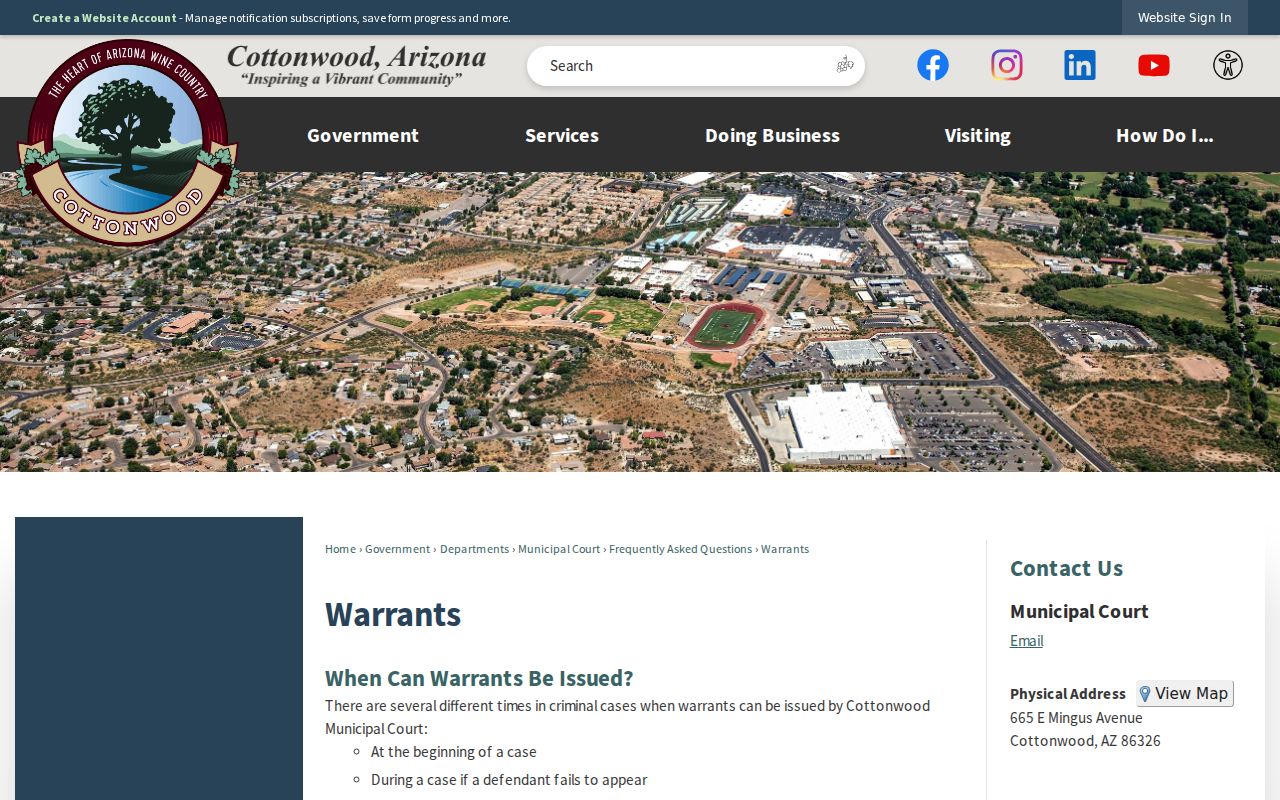
The published walk-in windows create a way to appear, but the judge still decides whether to quash and what bond applies.
Cottonwood court records instructions offer in-person, mail, or fax requests and do not accept telephone records requests.
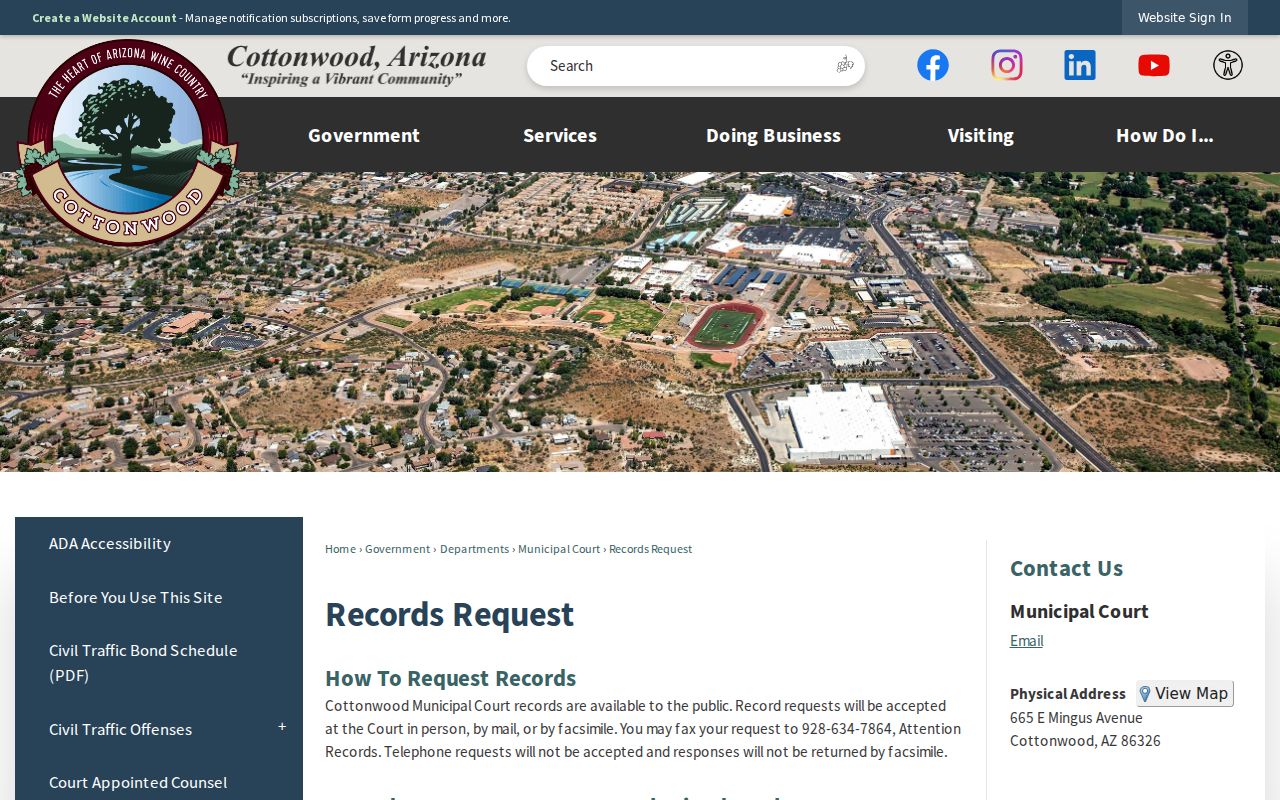
A records request can retrieve an identifiable file, while the clerk’s warrant procedure answers current status.
How to Pay or Lift a Traffic Warrant
The issuing judge controls the warrant. Payment, an appearance, a bond, or an approved plan may be part of the path, but sending money alone does not prove the warrant was recalled. Ask what the court requires before choosing a payment channel.
- Confirm the case, warrant, amount, and judge’s instructions with the issuing clerk.
- Complete the authorized payment, plan application, appearance, or bond step.
- Retain receipts and filed documents, then ask whether approval or an initial installment is still pending.
- Confirm the warrant status with court and address any separate license action through Arizona MVD.
Warning: Yavapai’s plan form says a warrant is not quashed until the plan is approved and the initial installment is received.
Chino Valley’s Separate Court Route
Chino Valley Magistrate Court handles municipal traffic and warrant functions.
The court route is distinct from a police incident-record request.
Chino Valley Police’s records form asks for incident-specific fields such as DR number, date, names, and report type.
Those fields can locate a police record, but the Magistrate Court owns its traffic case and warrant status.
A Payment Plan Is Not Automatic Clearance
Yavapai’s limited-jurisdiction form allows a new plan, adjustment, continuation, reinstatement, or due-date change. The form says plans last six months and makes quashing contingent on approval plus the initial installment.
Keep proof: Retain the application and payment receipt, then obtain court confirmation that the warrant entry changed.
An online processor can confirm a transaction, not the judge’s ruling.
Yavapai Traffic Payment Scam Check
YCSO warns that callers impersonate officials and demand immediate warrant payments. Court warnings likewise say jury-related payment demands are not made by phone. Never use a callback number, gift card, cryptocurrency request, or code supplied by an unsolicited caller.
Open the court’s official government page independently and call its listed number. Records fees, fines, and jail bond payments use different destinations, so even a real-looking county payment code may be for the wrong purpose.
Note: A legitimate payment receipt does not by itself prove a traffic warrant was recalled.
Traffic Warrants, FTA, and License Holds
Yavapai courts use “warrant” and “FTA,” not capias as a standard public label. A bench or traffic warrant authorizes court enforcement; FTA describes the missed setting; a license action is an MVD consequence. Clearing one status may require proof before another system updates.
| Mechanism | What Triggers It | What It Does |
|---|---|---|
| Traffic warrant | Court action after the case trigger | Issuing court |
| Failure to appear | Missed required setting | Court, with possible statutory consequences |
| License action | Separate administrative status | Arizona MVD after required court reporting |