
Yavapai County Active Warrants Explained
In Yavapai County, "outstanding" and "active" mean the same thing. The warrant has not been served, recalled, quashed, or otherwise closed in the controlling court record. The label can cover several types. A bench warrant from a missed date, an arrest warrant based on sworn probable cause, a probation or review-hearing warrant, or an extradition warrant all fit.
- Outstanding
- Still unresolved in the source that controls the record.
- FTA
- Failure to appear for a required court date.
- Quash
- A judge’s action setting aside a warrant.
- Recall
- Court withdrawal of a warrant from enforcement.
- Served
- The warrant has been executed, though the case may continue.
One label, several remedies. A Yavapai County warrant can sit outstanding for very different reasons. A failure to appear may just need a new court date or judge review. A probable-cause arrest warrant may call for a lawyer, a surrender, and a prompt appearance. A probation warrant or extradition hold brings another authority into the case. Arizona courts rarely use "capias," so copy the court's exact wording and never read the remedy off the word "active" alone.
No Single Yavapai County Master List
The official YCSO warrant-search link shows a maintenance notice. Yavapai County has no portal that combines Superior, Justice, municipal, federal, and out-of-county warrants.
Absence from one screen is not proof that a Yavapai County warrant does not exist. Confirm with the court named on the case or notice.
A Cottonwood court matter will not show up where a Prescott Justice Court case does. One court, one list. A newly issued or sealed warrant can also be missing from a public system. Even the phrase "county list" can mislead. YCSO may validate and serve a Yavapai County warrant while the file itself stays with the Clerk of Superior Court, a Justice Court, or a city court. Constables serve warrants for their Justice Court programs. Use the official state tools to find a lead, then put the status question to the venue named in the record.
How Yavapai County Tracks Active Warrants
Courts issue warrants and control their status. In Yavapai County, the Clerk of Superior Court keeps Superior Court records and issues writs and warrants. Justice and municipal clerks each hold their own lower-court files. YCSO Records processes and validates law-enforcement warrant records. Constables serve warrants from their Justice Court programs. DPS displays warrants that courts report, and the Arizona Courts warrant hub lays out the statewide framework and points you back to the court.

Ownership is the operational point. The issuing Yavapai County court, not any copied list, decides whether a warrant stays open. Geography makes that rule practical. Superior Court sits in Prescott and Camp Verde. Justice Courts stretch across Bagdad-Yarnell, Mayer, Prescott, Seligman, and Verde Valley, and municipal venues add yet another layer. A caller who asks only about a "Yavapai warrant" may reach an office with no authority over the case, so give the full court name and exact identifiers.
Why the List May Lag the Court
Arizona DPS states plainly that its information is not real-time, current, active, or complete. Public Access updates on a schedule and excludes some matters. A quash order can land before an outside display refreshes. A new Yavapai County warrant can also post late.
| What appears | Possible explanation | Best check |
|---|---|---|
| No name result | Reporting delay, excluded case, another venue | Issuing court |
| Active result after court action | Display has not refreshed | Court order and clerk |
| Case event but no warrant field | Portal is case lookup, not warrant status | Court clerk |
| Custody result | Booking information only | Jail and court |
Before calling a Yavapai County clerk, note the date you checked, the case number, the warrant number, and the court name. That context lets the clerk reconcile a mismatch. If the clerk confirms a change, ask for a written order or docket entry and ask when agency feeds usually refresh. Keep the court document with any receipt. A name dropping off a list is not itself the legal act that cleared it. A stale listing never outranks a later court order.
Inside an Active Warrant Record
What a Yavapai County record releases depends on case type and access rules. A verified active-warrant entry can include these fields.
| Issuing court | Superior, Justice, municipal, or another jurisdiction |
|---|---|
| Case and warrant number | Exact official identifiers, such as COURT-CASE-ID |
| Warrant type | Bench, arrest, FTA, probation, or another local label |
| Reason or charge | Publicly released basis, not an assumption |
| Issue date | Date shown by the source |
| Bond or appearance term | Case-specific court direction |
| Status and timestamp | Recorded state and date last checked |
A charge listed on a Yavapai County warrant record answers a different question than the warrant's own status, and the underlying case moves on its own separate track.
Documents Are Different From Live Status
Arizona eAccess can provide eligible Superior Court documents, civil and criminal, filed on or after July 1, 2010. It charges per document. Sealed, closed, and sensitive records stay out. It carries no verified public active-warrant field. The official eAccess interface demonstrates document selection, not a live Yavapai County warrant list.
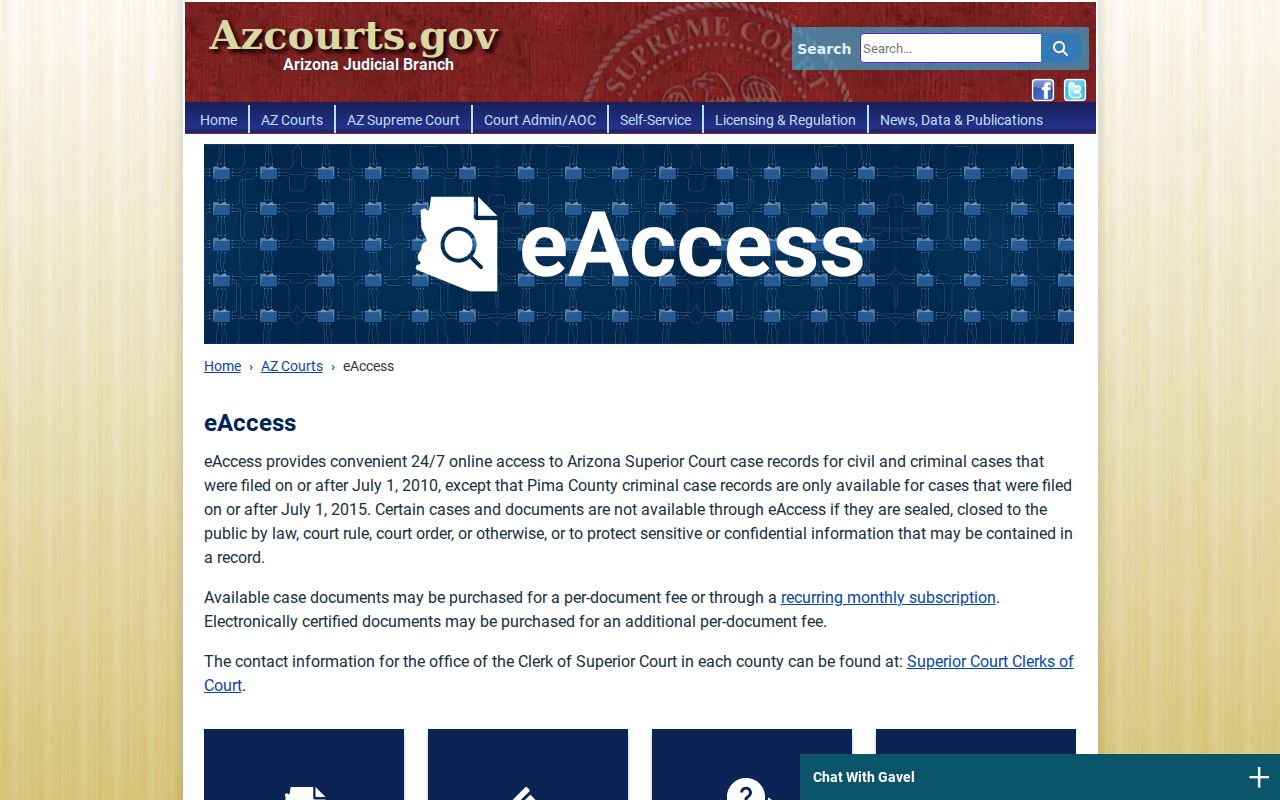
A document may explain the issuance or a later motion. Enforceability still belongs to the issuing Yavapai County court. A filed motion is also not a signed order. If it shows a request to quash or recall, check whether the judge granted it and whether the clerk entered the resulting status. Per-document fees buy a copy, not a status certification. Sealed, closed, and sensitive matters may remain unavailable through the interface.
Warrant Roundups and Most-Wanted Lists
YCSO's January 2026 roundup brought more than twelve arrests through a multiagency operation. It swept up probation violations, extradition cases, no-bond holds, child-support matters, and grand-jury warrants. Impressive range, but not a count of every active warrant. Yavapai County posts no current most-wanted roster, and no official gallery of names or photos belongs here. Tips go straight to the agency. The Yavapai County Most Wanted List page lays out the official tip and confirmation routes without hosting a list. Arizona also sorts warrants into two kinds. The official arrest and bench warrant page from the state's self-service center explains that split.
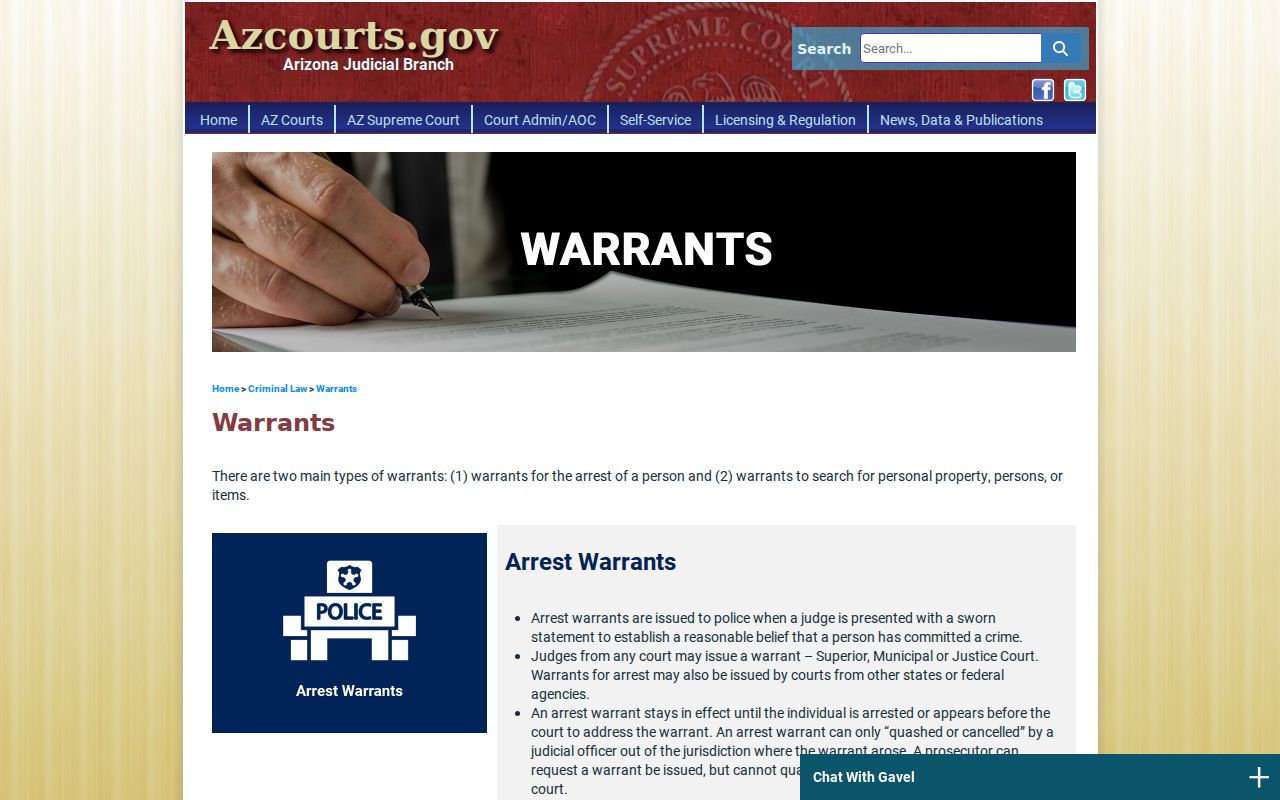
Knowing that difference, a reader can ask the right Yavapai County court why a warrant issued and how to resolve it.
One Court Shows It, Another Does Not
First copy the exact case and warrant numbers. A mismatch between systems usually traces to jurisdiction, identifiers, or timing. Pin down whether the record belongs to a municipal court, a Justice Court, the Superior Court, or another state. Then call that clerk through the official Yavapai directory.
- Give the clerk the source name and date checked.
- Confirm spelling, birth date, case number, and issuing venue.
- Ask whether the warrant is active, served, recalled, or quashed.
- Ask when an outside state or agency display should update.
- Keep any court order or receipt, but do not treat payment alone as a recall.
Police records, YCSO records, and a court clerk each keep different files in Yavapai County. Ask whichever office owns the court status to certify it.
Arizona Public Access Is Case Context
Public Access can show participating court names, case numbers, and public events. It is not a Yavapai County active-warrant database. CAPTCHA prompts, coverage gaps, excluded categories, and scheduled updates all shape what you see, and the official case lookup displays the statewide case-information workflow.
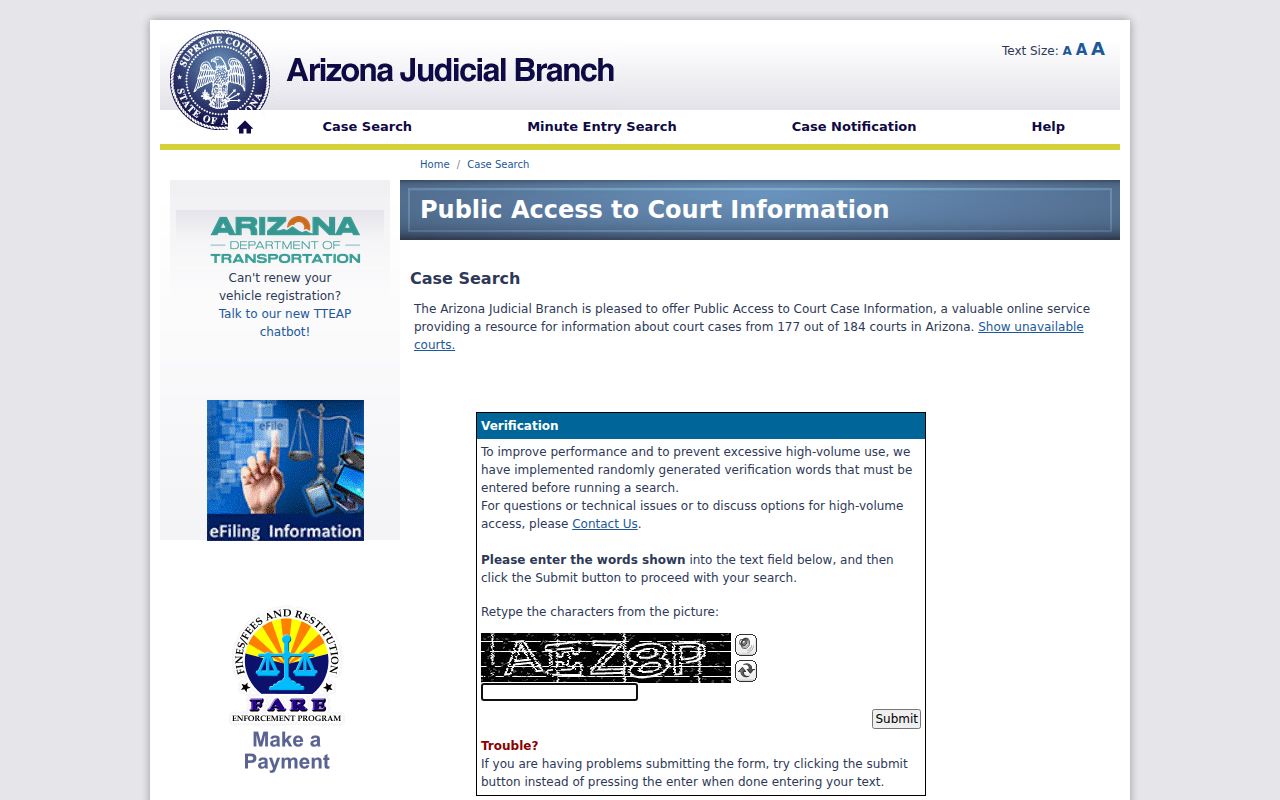
Use the court and case number you find there. That turns broad research into a direct Yavapai County status question.
When Your Name Is on the Warrant List
Do not test an unconfirmed result by walking up to an officer. Never wire money to a caller either. Instead, call a licensed Arizona attorney and the issuing Yavapai County court, and ask about a court date, appearance, counsel, bond, voluntary surrender, or a motion to recall or quash. The judge controls the outcome.
YCSO and Yavapai Courts warn that officials do not call demanding payment for warrants or court business. Independently call the official office.
The June 26, 2026 Warrant Resolution Event has passed. Treat it as history, not an open program. It showed that Yavapai County can pair court reconnection with rides and community services. Watch the court news page for anything new. If a fresh event appears, confirm registration, eligible warrant types, participating courts, transportation, and the date straight from the official notice. One past Yavapai County program creates no standing amnesty and guarantees no recall. Already in custody? Start with YCSO Inmate Search or the detention information line, 928-567-7734. Custody records, court warrant status, and release conditions are separate things, so ask the jail which facility holds the person and the court which hearing or bond order controls. A booking may carry another hold, extradition, or a no-bond term that no public list explains.